Upholstered furniture collects more than visible dust. It traps skin oils, crumbs, pet hair, and everyday odors inside its fabric. A pale sofa may look clean while its cushions hold weeks of unnoticed residue. Knowing what is the best way to clean upholstered furniture depends on the fabric, stain type, filling, and care label.
This guide presents seven practical cleaning methods for common household upholstery. They include vacuuming with a fabric attachment, gentle spot cleaning, steam treatment, baking soda deodorizing, and professional service. Each method has a proper place. None is completely risk-free. Water can leave rings, excessive heat can damage fibers, and strong detergents may fade deep colors. Test every solution on a hidden area first.
Small details matter. Use a soft brush around seams, where dust often gathers. Blot spilled coffee with a white cloth instead of rubbing it deeper. Dry cushions upright near moving air, not against a hot radiator. My own cleaning attempts have not always been perfect; some stains became lighter but did not disappear. That limitation is worth admitting. Results depend on fabric age, previous treatments, and how quickly the spill was handled.
The recommendations here follow manufacturer guidance and established upholstery-care practices. They are designed to reduce damage while improving cleanliness. When a label says “dry clean only,” or when mold and extensive staining appear, a qualified upholstery professional is the safer choice. Clean furniture should also remain comfortable, fresh-smelling, and safe for regular use.
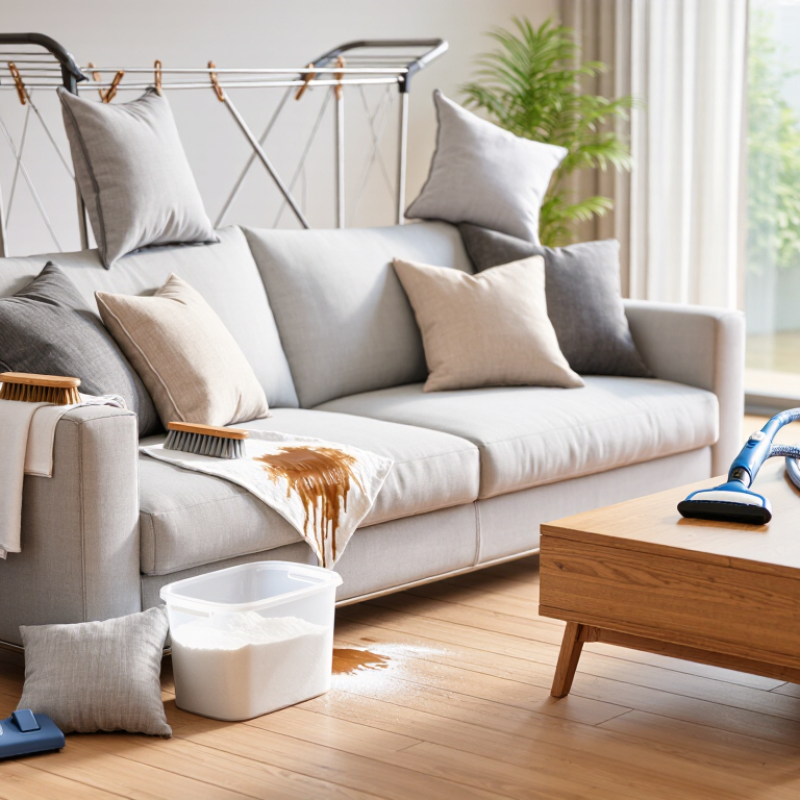
Before cleaning upholstered furniture, identify the fabric and read its cleaning code. This step helps prevent stains, shrinkage, and permanent texture changes. Look beneath the seat, along the frame, or under attached cushions for a care label. If the label is missing, check the furniture’s paperwork or ask a qualified upholstery cleaner. Guessing can be expensive.
The code W means water-based cleaning is usually suitable. Code S requires a solvent-based upholstery cleaner. WS allows both methods, while X means vacuuming or professional cleaning only. Never treat these codes as suggestions. They describe how the fabric reacts to moisture and chemicals. Test any cleaner on a hidden area first. Wait until it dries, then check for fading, rings, stiffness, or color transfer.
Vacuum dust before applying any product. Use a soft brush attachment around seams and buttons. Apply minimal moisture to W or WS fabrics, and avoid soaking the padding. For S fabrics, provide good ventilation and follow the product directions carefully. I once used too much water on a textured cushion, and the dark edge dried into a visible ring. That mistake changed my routine. I now measure small amounts, work gently, and allow full drying time. Cleaning codes can guide you, but unusual fibers, old stains, and fragile fabrics still deserve professional evaluation.
Find the care label beneath the seat, frame, or attached cushion. Paperwork may help too. Guessing can cause shrinkage or permanent texture changes.
W usually allows water-based cleaning. S requires a solvent-based cleaner. WS allows either method. X usually means vacuuming or professional cleaning only.
Yes. Apply a small amount to a hidden seam. Let it dry completely. Check for fading, stiffness, rings, or color transfer.
Lift solids with a spoon. Blot liquid with a white towel. Do not rub. Rubbing can push the stain deeper into the fibers.
Use less moisture than expected. Apply a small amount and work outward toward the stain’s center. Avoid soaking foam or padding.
Remove moisture with dry towels. Open windows and use gentle airflow. A small fan helps. Do not sit down until the fabric is fully dry.
Vacuum cushions, seams, folds, and hidden edges weekly. Use a soft brush attachment. Move slowly around buttons and stitching.
Seek help for grease, ink, old stains, fragile fibers, or strong musty smells. Repeated scrubbing may enlarge the damage. My own over-wetting mistake taught me that cleaning is not always improvement.
Cleaning upholstered furniture safely starts with identifying the fabric and checking its cleaning code, since different materials require different care. Gather gentle, suitable tools such as a vacuum with an upholstery attachment, soft cloths, a mild cleaning solution, and clean water. Before using any product, test it on a hidden area to check for color loss or fabric damage. Prepare the furniture by removing cushions when possible and protecting nearby floors and surfaces.
Next, remove dust, hair, crumbs, and other debris thoroughly, paying attention to seams and corners. Treat stains promptly by blotting rather than rubbing, then clean the upholstery in small sections with controlled moisture. Avoid oversaturating the fabric, which can cause odors or damage the padding. Allow the furniture to air-dry completely, improve ventilation, and inspect it for remaining marks. For anyone wondering “what is the best way to clean upholstered furniture,” the answer is a careful process that combines fabric-specific methods, gentle stain treatment, thorough drying, and regular maintenance.

 Salonix Furniture